Harbingers’ Magazine is a hands-on school of journalism which teaches all things creative by inviting young adults to run an online literary magazine.
harbinger | noun
har·bin·ger | \ˈhär-bən-jər\
1. one that initiates a major change: a person or thing that originates or helps open up a new activity, method, or technology; pioneer.
2. something that foreshadows a future event : something that gives an anticipatory sign of what is to come.
We and our partners may store and access personal data such as cookies, device identifiers or other similar technologies on your device and process such data to personalise content and ads, provide social media features and analyse our traffic.
It’s no secret Hayao Miyazaki’s specialty is producing animated films that push the boundaries of the genre and challenge beliefs that it’s ‘just for kids’.
His previous works such as Spirited Away, Nausicaä of the Valley of the Wind, and Princess Mononoke all offer stunning fantastical scenes suited for children but also offer subtle and multifaceted explorations of themes such as grief, nostalgia, and the passage of time, which speaks on many levels to a mature audience. The Boy And The Heron is no exception.
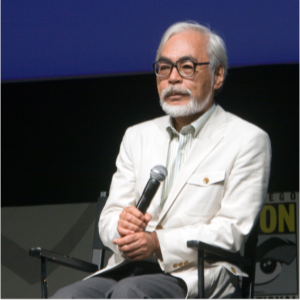
The initial fuss surrounding the film, apart from being Miyazaki’s first film in a decade, is the fact that it is supposed to be his last. This only heightened anticipation for the project and increased the pressure on the 83 year-old animation auteur. Luckily, Miyazaki did not let down his fans.
The film is beautiful both visually and story-wise. On the surface, you are met with a fantastical narrative about a boy Mahito, who has lost his mother to a fire. He ends up in an unknown land of mystery and magic after following a cocky grey heron who promises to bring him to his dead mother.
They end up forming an unlikely bond and go against, listen to this closely, a man-eating population of parakeets with a parakeet king at the head of the regime.
But the heart of the movie is much less superficial. It poses an important existential question related to the nature of existence. Loosely based on a 1937 novel (How Do You Live? ) the film instead takes heavily from Miyazaki’s own life as a semi-autobiographical story while being inspired by centuries of Japanese heron folklore.
The original movie title How Do You Live? is what the viewer is left to ponder upon witnessing this journey into the world of dreams. Such a simultaneously simple yet complex question is answered poetically by the heron, who proclaims to Mahito that life is about accepting that “it’s okay to forget.”
I believe it’s not a surprise if I say that every shot of this movie could be taken as a still and framed to be put on the wall. Seeing it on an IMAX screen really made me see and appreciate every subtle detail of the stunning cinematography.
The Boy And The Heron is a must-watch. It is suitable for every age as almost everyone will find something in the film to relate to.
The creative output of Miyazaki is similar to that of Martin Scorsese. Though both directors are leading figures in different genres of films, the common thread between the pair is how phenomenal they both are as directors so deep into their careers, yet are able to put out increasingly brilliant pieces that move all members of their audience.
Hailing from Ukraine, Anatolii was born in 2006 and now resides in Amsterdam while getting his diploma. Moving to the Netherlands was a decision first and foremost motivated by the ongoing war in Ukraine.
Anatolii keeps his hand on the pulse of modern media and underground culture, that’s what grows his interests and ambitions each day. Anatolii joined Harbingers’ Magazine to challenge himself in this area to explore cultural journalism.
In his free time, he enjoys basketball, watching films, and playing video games.
Anatolii speaks Ukrainian, Russian, English, and is learning Dutch.
A newsletter designed for young adults, including everything necessary to be up to date with recent global developments, and what's best from us at Harbingers' Magazine.
See you on Friday!
Ooops - please try again.
culture
Please create an account to bookmark this article.
Support our online magazine and stay connected with the latest articles, updates, and more.
Register now to be a part of our journey and help us continue bringing you quality content! (sub)
We use cookies to ensure that we give you the best experience on our website. If you continue to use this site we will assume that you are happy with it.Accept